Hema – [00:00:00.000 –> 00:00:16.000] song. Rolling. Okay. Ready. Hi, I am Hema Ramanathan, sorry. Okay. Hi, I am Hema Ramanathan, [00:00:16.000 –> 00:00:24.040] a teacher, a teacher educator, an author, a scribbler, a podcaster now. Like someone [00:00:24.040 –> 00:00:34.640] called me a pedagogical polymath. Welcome to the Hema Zone. Yeah. Sorry. Don’t do that. [00:00:34.640 –> 00:00:46.160] No, that’s me. I’m going to begin again. I’m sorry. I’m getting tired. Hi, I’m Hema Ramanathan, [00:00:46.160 –> 00:00:54.800] a teacher, a teacher educator, an author, a scribbler, a writer, now a podcaster, as [00:00:54.800 –> 00:01:01.720] someone called me a pedagogical polymath. Welcome to the Hema Zone, where I discuss [00:01:01.720 –> 00:01:09.520] a wide range of topics related to the arts, movies, books, and education. Every third [00:01:09.520 –> 00:01:17.280] Wednesday, I’ll weave a narrative, share my ideas with a scintillating guest for a [00:01:17.280 –> 00:01:27.840] sparkling chat. And today, in this segment, we have a very young writer, a budding author, [00:01:27.840 –> 00:01:37.480] Siddharth Vijayaraghavan. His book, The Empire of the Cholas, is his first, and it’s about [00:01:37.480 –> 00:01:44.280] the building of the Tanjavur Periyakovil. Right? (Siddarth – It is).(Hema – So talk about that). Siddarth – First of all, thank [00:01:44.280 –> 00:01:49.800] you for having me on. It’s an absolute privilege to be here. It’s wonderful being here. The [00:01:49.800 –> 00:01:56.120] book has been, it is my first book, and it’s the first book of a trilogy. And what I intend [00:01:56.120 –> 00:02:00.560] to write about in the trilogy are about three temples in South India, constructed by the [00:02:00.560 –> 00:02:06.120] Chola Empire, the Tanjavur Periyakovil, or the big temple in Tanjavur, which is the first [00:02:06.120 –> 00:02:11.240] book and represents the rise of the empire. The Gangaire Konda Chorlapuram temple, which [00:02:11.240 –> 00:02:17.000] is in a small village, which is about an hour’s drive away from Tanjavur, which will be, which [00:02:17.000 –> 00:02:22.640] represents the Chola Empire at its apogee, which will be the topic of the second book. [00:02:22.640 –> 00:02:29.460] And the temple at Darasuram, the Aira Vivateshwarar temple, which represents the Chola Empire [00:02:29.460 –> 00:02:36.080] at kind of its twilight years, if you will. All three temples are recognized as UNESCO [00:02:36.080 –> 00:02:42.160] World Heritage Sites called the Great Living Chola temples. And through all these three, [00:02:42.160 –> 00:02:47.800] they were constructed at different points of the Chola Empire’s history, but they are [00:02:47.800 –> 00:02:54.820] all universally spectacular in very unique ways, unique ways to them. And what really [00:02:54.820 –> 00:03:00.280] interested me was not the construction of the temple, but the fact that these temples [00:03:00.280 –> 00:03:05.880] weren’t part of the landscape. This is a flat, undulating floodplain on the banks of the river [00:03:05.880 –> 00:03:10.840] Kaveri. And these are stone monuments that stretch up all the way to the sky. How did [00:03:10.840 –> 00:03:16.000] they come to be? What were the human stories that drove them right from the emperors who [00:03:16.000 –> 00:03:21.520] decided they should be constructed to the everyday laborers who worked on the construction? [00:03:21.520 –> 00:03:27.360] How did villages become part of the temple? How did all of this get recorded? What were [00:03:27.360 –> 00:03:35.040] the challenges, personal and national, that were faced in the construction of this temple? [00:03:35.040 –> 00:03:37.040] These were the questions that… Hema – [00:03:37.040 –> 00:03:39.040] When I cough, you need to stop. [00:03:39.040 –> 00:03:54.040] Sorry about that. Break – [00:03:54.040 –> 00:03:59.040] You don’t have to repeat though. You start from where you left. Siddarth – [00:03:59.040 –> 00:04:06.040] So these were questions that have been in my mind, continue to be in my mind and will [00:04:06.040 –> 00:04:12.040] continue being in my mind for the foreseeable future. And I have found fiction to be the [00:04:12.040 –> 00:04:15.040] way to answer them. So that is how I came to these books. Hema – [00:04:15.040 –> 00:04:16.040] Historical fiction. Siddharth – [00:04:16.040 –> 00:04:18.040] Historical fiction, of course. Hema – [00:04:18.040 –> 00:04:23.040] So how do you see the history part of the fiction? Siddharth – [00:04:23.040 –> 00:04:30.040] My… I mean, at one level, it is historical fiction because it is inherently about the [00:04:30.040 –> 00:04:37.040] past. It is historical fiction because in doing… in kind of understanding my characters, [00:04:37.040 –> 00:04:43.040] in kind of understanding the places where my novel were taken, I needed to do a certain [00:04:43.040 –> 00:04:48.040] type of historical research. But they are also historical… I find it to be historical [00:04:48.040 –> 00:04:53.040] fiction because it not just talks about the past, but it also talks about something in [00:04:53.040 –> 00:04:59.040] the present. And I have written the first book. I find that I have found the answer [00:04:59.040 –> 00:05:03.040] to how it answers… how it talks to something in the present for the first book. And I am [00:05:03.040 –> 00:05:06.040] sure I will find something interesting to say about the second and third books too. Hema – [00:05:06.040 –> 00:05:11.040] Because when we talk about history usually, we talk about political or military history. Siddharth – [00:05:11.040 –> 00:05:12.040] Absolutely. Hema – [00:05:12.040 –> 00:05:19.040] When we talk about historical fiction, it is usually about a military background. Siddharth – [00:05:19.040 –> 00:05:20.040] Right. Hema – [00:05:20.040 –> 00:05:27.040] Right. So when you talk about yours has a certain politics to it, but the building in [00:05:27.040 –> 00:05:34.040] itself is a sociological history. So talk about that. Siddharth – [00:05:34.040 –> 00:05:42.040] I mean, a building… I mean, at a very base level, a building comes to be built by people. [00:05:42.040 –> 00:05:46.040] How can you talk about the history of a building without talking about the histories of the [00:05:46.040 –> 00:05:51.040] people, about the lives of the people, the way that people thought of themselves and [00:05:51.040 –> 00:05:52.040] the worlds around them? Hema – [00:05:52.040 –> 00:05:59.040] Very easily. When you think of the Empire State Building, whoever thinks of it as anything [00:05:59.040 –> 00:06:02.040] but America saying, “Oh, we’ve got the tallest building.” Siddharth – [00:06:02.040 –> 00:06:07.040] And how much poorer we are all for it. Because even if you consider an Empire State Building, [00:06:07.040 –> 00:06:12.040] it was constructed by immigrants, Irish people, Italian people, people from Eastern Europe [00:06:12.040 –> 00:06:18.040] who were fleeing, who came to this, you know, the Shining Colossus in New York City and [00:06:18.040 –> 00:06:22.040] who made their lives by building this building. They were not only constructing a building, [00:06:22.040 –> 00:06:24.040] they were also constructing their lives. Hema – [00:06:24.040 –> 00:06:30.040] So talk about Tanjai Periyakovil and how you’ve seen the building of it in sociological terms. Siddharth – [00:06:30.040 –> 00:06:37.040] So it is… this is a very unintended… I mean, like I did not think of… when I started [00:06:37.040 –> 00:06:42.040] writing it, I did not think of it as a sociological… as sociofiction or sociological fiction. [00:06:42.040 –> 00:06:46.040] It is something that came to be because I realized that these were the kind of ways [00:06:46.040 –> 00:06:52.040] I needed to think in order to answer it. Answer the questions that I had for myself [00:06:52.040 –> 00:06:58.040] and answer the kinds of things about my… the story that came to me that didn’t make sense to me. [00:06:58.040 –> 00:07:03.040] I had… from the perspective of writing, I could not have written this book without [00:07:03.040 –> 00:07:07.040] understanding certain things about how the Chola Court was organized. [00:07:07.040 –> 00:07:12.040] The kind of important role that women played in the Chorah Court, how that intersected [00:07:12.040 –> 00:07:17.040] with ideas of caste, how that intersected with ideas of class. At the level of fiction, [00:07:17.040 –> 00:07:23.040] in order to construct a story that was believable, I needed to have all these details down. [00:07:23.040 –> 00:07:29.040] And for that, I needed to do… I could only do certain amounts of research, but beyond that, [00:07:29.040 –> 00:07:33.040] I needed to speculate. I needed to kind of imagine… Hema – [00:07:33.040 –> 00:07:37.040] Let me take you back to the research that you did. Yes. Let’s begin with that. Siddharth – [00:07:37.040 –> 00:07:45.040] Okay. So, the research that I did was a process of evolution. [00:07:45.040 –> 00:07:51.040] I began writing the book very young, when I perhaps did not know how to do research. [00:07:51.040 –> 00:07:56.040] So, 13? 13, 14? Not an age when people really do a lot of research. [00:07:56.040 –> 00:08:00.040] So, very… so initially my research was very surface level. [00:08:00.040 –> 00:08:06.040] There was a very, very thin Wikipedia page of a bunch of people. [00:08:06.040 –> 00:08:10.040] They were guidebooks I got. And I kind of… [00:08:10.040 –> 00:08:14.040] And there were a couple of other books. I kind of very… [00:08:14.040 –> 00:08:18.040] The heights of research back then. You’d Google “The Cholas”, “Big Temple Stories” [00:08:18.040 –> 00:08:22.040] and things like that, and you kind of read. That was the kind of research. [00:08:22.040 –> 00:08:27.040] The turning point really came around 2015, when I met Dr. Chitra Madhavan in Singapore, [00:08:27.040 –> 00:08:31.040] where I was living. Dr. Chitra Madhavan, who also wrote the foreword of the book [00:08:31.040 –> 00:08:37.040] and has turned out to be a friend and mentor, is the authority on South Indian temple history [00:08:37.040 –> 00:08:41.040] and South Indian temple architecture. She very graciously read the… [00:08:41.040 –> 00:08:48.040] read an early draft of the book. And she became somebody with whom I could consult a lot [00:08:48.040 –> 00:08:53.040] and ask a lot of questions. As I grew up, as I went from school to college, [00:08:53.040 –> 00:08:58.040] my abilities to research also increased. I started reading more academic papers. [00:08:58.040 –> 00:09:02.040] A big source for me was “The Cholas” by K. A. Neelakanta Shastri. [00:09:02.040 –> 00:09:07.040] 1935, it was written, still remains the authority on Chola history, [00:09:07.040 –> 00:09:11.040] which is a testament to his historianship, but also the difficulties of doing… Hema – [00:09:11.040 –> 00:09:16.040] But you’re still talking political. Talk to me about the sociologic aspect. [00:09:16.040 –> 00:09:19.040] You talk about the people. You talk about the people. Siddharth – [00:09:19.040 –> 00:09:25.040] So, the sociological aspect could only… Because the people really did not… [00:09:25.040 –> 00:09:28.040] You couldn’t find a lot that was written by the people. [00:09:28.040 –> 00:09:32.040] So what the people did had to be teased out from the political. [00:09:32.040 –> 00:09:35.040] I’ll give you an example. So… And also tell… [00:09:35.040 –> 00:09:38.040] Which will also tell you how I did the research that I did. [00:09:38.040 –> 00:09:44.040] So in 2020, in the Hindu, there was an article about a certain Napkan Karpagavalli, [00:09:44.040 –> 00:09:51.040] who was a dancer, who donated a substantial portion of the land and money to construct the big temple. [00:09:51.040 –> 00:09:58.040] And this I found very interesting. First of all, what could have been her story? [00:09:58.040 –> 00:10:02.040] What could have been her position in life led up to her to do that? [00:10:02.040 –> 00:10:07.040] What was she experiencing? And what was her station as a court dancer? [00:10:07.040 –> 00:10:10.040] What could she have observed? What could she have seen? [00:10:10.040 –> 00:10:15.040] And why did she decide to invest so much of her personal fortune in it? [00:10:15.040 –> 00:10:23.040] And then I kind of had to read up about temple dancers from inscriptions and kind of works around that. [00:10:23.040 –> 00:10:26.040] And from there, I kind of added an element of my imagination. Hema – [00:10:26.040 –> 00:10:28.040] So that was a historical part of it. Siddharth – [00:10:28.040 –> 00:10:29.040] That was a historical part. Hema – [00:10:29.040 –> 00:10:33.040] So how did you move her into your fiction part? Siddharth – [00:10:33.040 –> 00:10:41.040] I had her as a character. I kind of had the historical characters who I had already written and fleshed out. [00:10:41.040 –> 00:10:48.040] For example, the Chakravarti’s sister Kundavai developed very strong friendships with her. [00:10:48.040 –> 00:10:52.040] And I started imagining again, like what could have interactions been like? [00:10:52.040 –> 00:10:58.040] What could her, what could have been more than the sociological ideas of power, gender, caste? [00:10:58.040 –> 00:11:01.040] What did she aspire? What could she have missed out for? [00:11:01.040 –> 00:11:04.040] What was it really like to be at that moment? [00:11:04.040 –> 00:11:07.040] So in that sense, it’s not just, you know, sociological. [00:11:07.040 –> 00:11:16.040] It’s an act of transporting yourself and trying to live in a different body and trying to perceive differently and feel differently, [00:11:16.040 –> 00:11:21.040] which is very limited because I am very, I am not a woman. [00:11:21.040 –> 00:11:25.040] I am. You wouldn’t, you couldn’t tell. [00:11:25.040 –> 00:11:29.040] But I’m, I do not believe I wasn’t born a thousand years ago. [00:11:29.040 –> 00:11:32.040] Another startling revelation. [00:11:32.040 –> 00:11:35.040] There were obvious limitations to all of this. [00:11:35.040 –> 00:11:41.040] So in that sense, an imprint of the present finds itself in the past when we talk about historical fiction. Hema – [00:11:41.040 –> 00:11:48.040] One of the things that has been said, especially with Kalki and a lot of the historical fiction being written now, [00:11:48.040 –> 00:11:58.040] is how the the fictional characters are taking on a life of their own. [00:11:58.040 –> 00:12:03.040] And people start believing that they’re historical because they’re in a historical fiction novel. [00:12:03.040 –> 00:12:09.040] Will that do you think that will happen in your novel and to whom it’s so? Siddharth – [00:12:09.040 –> 00:12:14.040] I hope it does. If it does, it means I’ve done something right. [00:12:14.040 –> 00:12:21.040] If it does happen, I would like it to happen to the character of Vellaiappan, Roland Creep. [00:12:21.040 –> 00:12:24.040] I really, really like that character. I find him so. Hema – [00:12:24.040 –> 00:12:26.040] Tell us how you came up with that character. Siddharth – [00:12:26.040 –> 00:12:37.040] I think that character was kind of the point of rupture that caused me to think about the novel and to think about the temple as not just being embedded in a place, [00:12:37.040 –> 00:12:40.040] but also within a broader geography. [00:12:40.040 –> 00:12:48.040] I mean, it might be in one place, but it connotes a broad, it evokes and connotes a geography far beyond all of that. [00:12:48.040 –> 00:12:53.040] So the big temple, contrary to what I write in my novel, was not completed in one go. [00:12:53.040 –> 00:13:03.040] So the Cholas built it, the Pandyas augmented it, the Vijayanagara Empire augmented it, the Tanjavur Marathas augmented it, and they all added different parts of it. [00:13:03.040 –> 00:13:16.040] One of the things that Tanjavur Marathas, who ruled around the 17th, 18th and 19th centuries in Tanjavur, as the name indicates, did was to kind of modify parts of the Vimanam, [00:13:16.040 –> 00:13:24.040] which is the 216 foot tower that you see and plays a very prominent role both in the cover and in the plot of my book. Insert photo of cover [00:13:24.040 –> 00:13:32.040] So what they did was there was a Danish colony not too far away from Tanjavur called Tranquebar. [00:13:32.040 –> 00:13:36.040] That’s what the Danes called it. We call it Tarangampadi, where the waves sink. [00:13:36.040 –> 00:13:46.040] So the chief of the mission, a very important official there, was a man named Roland Crick. He lived in perhaps the 18th century. [00:13:46.040 –> 00:13:53.040] He was one of the first Danes to really come and set up shop and it really was setting up shop in Tarangampadi. [00:13:53.040 –> 00:14:03.040] So in order to commemorate the close relationship, a stucco sculpture of a white man in a bowler hat was added to the north face of this Vimanam. [00:14:03.040 –> 00:14:12.040] And when I went to the temple circa December 2014, and it was pointed out and I started wondering how it could have been. [00:14:12.040 –> 00:14:16.040] So in a certain sense, the story came before the history came. [00:14:16.040 –> 00:14:26.040] This character came fully formed in my head and I had to kind of converse with history and negotiate with history in order to, you know, retain faithfulness to that. [00:14:26.040 –> 00:14:36.040] He in my novel… Cut. You need to move. Look, you know, your position. We’re getting too much of a profile. Break – [00:14:36.040 –> 00:14:41.040] Yeah. OK. Wait, wait, wait. Yeah. [00:14:41.040 –> 00:14:47.040] Little more this side because he tends to move. [00:14:47.040 –> 00:14:52.040] You were facing me. Part of it should be the camera. OK. [00:14:52.040 –> 00:14:59.040] Can you give me an eye line to focus on? No, you need to look at her. Right. Your face needs to look at me. Yeah. [00:14:59.040 –> 00:15:07.040] But your body needs to be angled. And I know that seat moves, so you tend to move with… There’s a tendency to do that. You can hold that chair. [00:15:07.040 –> 00:15:17.040] I did for the first five minutes. Then I found that my hand was… [00:15:17.040 –> 00:15:23.040] This is what happens when the topic is too moving. OK, continue. It’s not moving at all. It’s exciting. Siddharth – [00:15:23.040 –> 00:15:37.040] Anyways, so in my novel, he is this mysterious white man, which is why he gets the Tamil name “Vellai Appan” who is met, who washes ashore and is rescued by a fisherwoman. Hema – [00:15:37.040 –> 00:15:43.040] Let people read the book. Then let them come to know what you’ve done with them. OK. [00:15:43.040 –> 00:15:55.040] But I was interested in… Because people won’t know what the background to it is, which is what I’m exploring, because I think that it’s a historical part of the fiction that really interests me. OK. [00:15:55.040 –> 00:16:12.040] That is a rising genre right now. It is. And the Cholas, with all of South India, actually, the political and social history of South India, we don’t have enough information. [00:16:12.040 –> 00:16:17.040] And you said you talked to Dr. Chitra Madhava. Yes. [00:16:17.040 –> 00:16:22.040] How did you learn about the construction and the architecture of the temple? [00:16:22.040 –> 00:16:32.040] How much of what you’ve written in the last third of your book, which is devoted practically all of it, all of that part to the construction of the temple? Yeah. [00:16:32.040 –> 00:16:39.040] How much of that is authentic and how much of that is imagined? Siddharth – [00:16:39.040 –> 00:16:47.040] Interesting question. I think the details of what… [00:16:47.040 –> 00:17:01.040] First, I would like to kind of question like what the binary between the authentic and the imagined, because even what is the authentic is also imagined to be the authentic. [00:17:01.040 –> 00:17:09.040] We have no way of knowing. (Hema – OK. So, good enough answer). But let me give you an example of an anecdote from my story. [00:17:09.040 –> 00:17:25.040] So there is a story of Sarapallam, the kind of the sand scaffolding that originated in a village that exists called Sarapallam, leading up to construct the Vimana, the kind of the the tallest tower of the temple. [00:17:25.040 –> 00:17:33.040] Now, is there archaeological evidence that it exists? I don’t think so. But everywhere you go in Tanjavur, and here’s the very interesting part. [00:17:33.040 –> 00:17:42.040] Everyone in and around Tanjabur has stories about the temple because and these are stories that are often passed down from generation to generation. [00:17:42.040 –> 00:17:48.040] And if you tell them you’re going to the temple, they will tell you the stories. You don’t need to ask. They will tell you. [00:17:48.040 –> 00:17:56.040] So in a certain sense, these are oral histories, but these are not necessarily verifiable. Hema – Yeah, which is fair enough. [00:17:56.040 –> 00:18:03.040] I mean, yeah. And we forget that oral histories are as much a part of history as written history is necessarily. Absolutely. [00:18:03.040 –> 00:18:26.040] OK. And I think what has been interesting in reading your book is having a teenager having the imagination to go beyond himself, first of all, going beyond the immediacy of his surroundings to hundreds of years in the past. [00:18:26.040 –> 00:18:35.040] That I found very interesting. And I think people need to know. You know, we always say people, young people don’t do anything. [00:18:35.040 –> 00:18:40.040] They waste their time on their phones, whatever. We have somebody here who didn’t. [00:18:40.040 –> 00:18:48.040] He spends a lot of time on the phone, but he doesn’t necessarily waste it. So there’s still hope for everybody. Hope for your child, too. [00:18:48.040 –> 00:18:58.040] Thank you very much for coming in today and talking about your book.( Siddharth – Thank you for having me. It was a great conversation). [00:18:58.040 –> 00:19:02.040] Well, and thank you for listening to me and so that’s today. [00:19:02.040 –> 00:19:20.040] Share this podcast. Follow THZ on Instagram. Catch me on Facebook at The Hema Zone and I’ll be back with more compelling writers, authors, musicians, filmmakers. [00:19:20.040 –> 00:19:33.040] If you have suggestions, then drop them in at scribble a note to me at the Hema Zone dot com and the third Wednesday of every month. [00:19:33.040 –> 00:19:44.040] Check out. We will have a podcast that we drop where I’m chatting with somebody as enthusiastic and interested and exciting as one we’ve had today. [00:19:44.040 –> 00:19:50.040] Thank you.
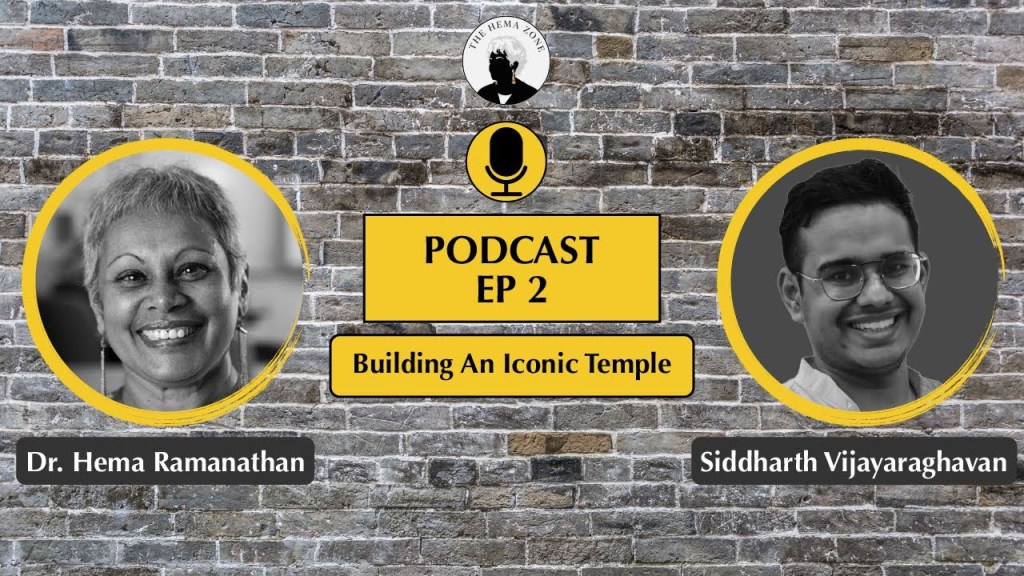
Building An Iconic Temple with Siddharth Vijayaraghavan – Transcript
by
Tags:
 Site Title
Leave a comment